A new year

Over the last year or so, you may have noticed my posts on Just to do Something Bad have dwindled to nothing but announcements of our Notional Pipe streams, with nary a long-winded post on the philosophy of rigging or inscrutable cartoon to be found.

There are a lot of reasons for that, but they basically all boil down to my life being very busy. I’m working full time for The Third Floor now (on things which are extremely cool but of which I cannot speak), Contour Rig Tools was released last year (with the attendant need for support), we’re preparing documentation for Little Bird so it can be released on the Unreal marketplace, and I’m working on proposing another SIGGRAPH talk. Also, I’m now the father of a teenager, which is, as I understand the kids these days would characterize it, a lot.

But that doesn’t mean that no work has been going into the ephemeral system! Quite the contrary, a lot has changed and I’m hoping to have a swath of new features to show soon. I’ll start out with a quick demo of the reproportion slider.

As I’ve probably pointed out a few times, the ephemeral system does not enforce proportions on any character, so it’s useful to be able to restore proportions when needed. Previously you could kinda do this by using the Zero slider with the blend restricted to translation only, but this was awkward and really only worked in Forward mode. The reproportion slider, on the other hand, works in any mode, letting you do things like restore proportions to the arm while keeping the hand in place.

You may also note that the ephemeral system is a lot faster now, and has a nifty bottom bar ui reminiscent of AnimBot. It’s fast enough now that I’m considering trying to do multi-pose interactions interactively—we’ll see how that goes.

We should have a lot more new stuff to show soon, but in the meantime, here’s a link to tomorrow’s Notional Pipe stream where we’ll be showing more development of the leg component:

Leg component stream

In our next stream I’m going to start building the leg component.

This is the real meat of the whole component building thing—it’s by far the most complex component in the system and will use all the things we’ve learned so far.

Here’s the previous one, where you can see me fumble around a bunch making a component reversible, because rigging!

Componentized rigging streams

Here’s our first two componentized rigging streams!

To be perfectly honest, the first one really doesn’t get to the point across very well—my head really wasn’t in the game when we did that one. The second one is much better and I backed up and explained some of the basic concepts again, so I actually recommend that people start with that one.

And here’s our third, which you can join at Tuesday at 5pm EST!

To do a brief explanation, componentized rigging is a way of creating a rig out of reusable components, rather then scripting an auto-rig system. Each of these components is just a Maya file that is referenced into your rig file. But critically, the component can only communicate with the rest of the rig through specific, predefined inputs and outputs.

That might sound like a strange way to rig, but it has huge advantages. Because each component depends wholly on it’s inputs to define its proportions, those proportions can be changed any any time, allowing you to reset a characters proportions without rebuilding the rig! And because each component presents a specific “interface” to the rest of the rig, you can trivially swap out different kinds of arms, for instance, without disturbing the rest of the rig at all. A componentized rigging system is also much, much easier to develop then a traditional auto-rigger.

Because Contour bones and joints make default states like “bone length” explicit, it’s extremely easy to do componentized rigging with Contour, and you can see that in the streams above if you can sit through all my digressions!

Our componentized system builds on the work of Raffaele Fragapane, who popularized the concept on Cult of Rig.

Little Bird nominated for an emmy! (And also you can watch it now!)

There are many announcements about Little Bird! To start with, we’ve been nominated for an Emmy in the Childrens and Family/Outstanding Short Form Program catagory!

https://theemmys.tv/cafe-nominations-2022/

Not only that, but we can finally post it publicly for all to see!

Thirdly, and this has been up for a bit but we neglected to tell anyway, you can get the Little Bird plugin on github now.

We’re still working on documentation, so it’s probably pretty hard to just jump into using it right now, but feel free get it and play around. Heck, it’s open source, so feel free to modify it as you see fit and make PRs for me. (Of course, it’s all blueprints, which are binary files, so it will be pretty hard for me to review those PRs and you may need to send me a bunch of explanation of what you’ve actually done, but still).

We are such stuff as streams are made on.

We had to take a few months off from streaming, but I’m happy to report that next Tuesday Notional Pipe streams will be back!

This time we’ll be discussing componentized rigging, which is a topic I’ve wanted to talk about for a while. Frequent viewers may recall that I don’t like auto-rigging systems, which add an extra layer to the rig creation process that frequently gums up the works. But you’re obviously not going to build every rig from scratch! Componentized rigging, a concept I first encountered through Raffaele Fragapane’s Cult of Rig, gets you all of the reproducibility of auto-rigging without the ugly rig build and rebuild process.

Contour works exceptionally well with componentized rigging. In fact, the rig components I’ll be building on stream are likely to be shipped with Contour in the future! I hope to see you there.

Whatever happened to the teenage stream?

Hey, it was only a month or so ago that we were doing weekly Notional Pipe streams! Then…silence.

I know there have been a lot of wild rumors, so I want to set the record straight: we absolutely did not go to space. I did go to SIGGRAPH, though, and then had about ten thousand different things to do when I got back.

Streaming will resume soon with a series on Componentized Rigging with Contour. I’ll let you all know when it happens!

An Ephemeral live stream appears from the shadows!

When all hope seemed lost, an Ephemeral live stream appeared, as if from nowhere! And when it’s job was done it vanished, as mysteriously as it had arrived.

A more prosaic explanation is that I forgot to announce the stream this morning, so I’m now announcing it 45 minutes before it actually starts. Sorry, hope you can join us anyway!

It’s too bad because this one is a great opportunity to watch me fall on my face in front of the world! Today we’ll be using a new build of the ephemeral system, hot off the compiler, with color coding for ephemeral controls. Will it fail at a critical moment? The only way to find out will be to join us at 4pm EST!

Ephemeral live stream!

It’s that time again! Join us today as we continue our adventures in ephemeral/interpolationless animation.

Last time we went over using the ephemeral system’s "Glue Groups” feature to make it easy to attach the box and the rabbit’s hands together and manipulate them in either direction:

This time we’re going to take the key poses we put down and fill them out. Maybe if I rant less this time we’ll get farther!

Hope to see you there at 4pm EST.

How to polish animation with an ephemeral rig

Here’s Tuesday’s stream:

I want to call attention to how much more time I spent conceptualizing the motion via key poses then I did polishing and inbetweening. Taking a shot from blocking to final using the ephemeral approach can be extraordinarily quick! This keeps the animators focus where it belongs, on the big questions (like acting and appeal) not the little ones that don’t actually matter (like why is my elbow bobbling around on frame 23?).

I get a lot of questions around how polish works in an ephemeral/interpolationless approach. The idea of polishing motion when your motion is just a dense stream of poses, with no curves or graph editor, is a pretty alien one to lots of animators! Reflexively, people often assume is must be more difficult, and that you pay for ease of posing with difficulty of polish.

Nothing could be further from the truth! In fact, I’ve found polish to be far easier. I used to have to go through a lengthy process of splining and cleaning up curves—now I just fix any problem I see whenever it comes up, directly and without any fuss. It’s a lot more like a digital painter or zBrush sculptor, who can just go in with a brush and correct any little issues without disturbing the rest of the piece. The ephemeral system’s multi-pose editing tools make that easy, and those tools are still evolving.

I’ve put together an excerpt with just some of the polish bits from the stream:

The ephemeral system can process motion in ways conventional tools cannot,. In this case, for instance, the “smooth over time” tool can “filter” the motion by looking at the entire pose or any section of it, not just a specific anim curve.

Ephemeral animation demo part 2

Part 1 of our ephemeral animation demo went very well!

It also went pretty slowly, as there was a lot to discuss. We got some key poses down and talked a lot about pose-based animation technique and how to use the ephemeral system. Today, we’ll be filling out the shot with more poses and probably getting to some inbetweening. You’ll get to see me finish a section of the shot, without ever opening a graph editor!

Join us at 4pm EST at https://youtu.be/i_O6fsN2vkU

Live ephemeral animation demo

We won’t be doing a stream today due to Memorial Day, but our next stream is so important I’m announcing it early! On 4pm EST Tuesday June 7th I’ll begin an ephemeral animation demo. I’m going to animate that alien rabbit on stream, in real time, showing exactly how I’d approach animating a shot with the ephemeral system! Come join us at https://youtu.be/N9maUnlqy9E!

I get a lot of questions like “how can you actually animate a whole shots this way?” This stream should answer those questions!

And here’s the last stream, showing the setup for the rig I’ll be using for the animation demo:

This one wasn’t our most approachable stream—the ephemeral system doesn’t yet have any UI for setting up rigs, just animating them, so you see me using a lot of Python and without much visual feedback on what the system is actually doing. But animating with the ephemeral system is quite intuitive, and rigging should be soon too—we just have to turn our attention to UI. You’ll get to see what animating with it is like on the 7th!

Ephemeral streams

Today, we’re going to start a series of streams on ephemeral rigging and animation! We’re going to start by taking our weird alien rabbit and rigging it ephemerally. Then in future streams we’ll animate it in a shot live!

Come check it out at https://youtu.be/c7f2aaam-OY

Plus, here’s the recording of our previous stream on the Little Bird rendering and compositing system:

Little Bird premiers at Shortnite!

I’m happy to announce that Little Bird is premiering at Shortnite!

That’s a short film festival happening in Fortnite! As a venue, Fortnite has many advantages. If you go to Annecy, can you dress up like Batman and shoot people? Yes, but you’d probably get arrested. So that’s a point in Shortnite’s favor, I think.

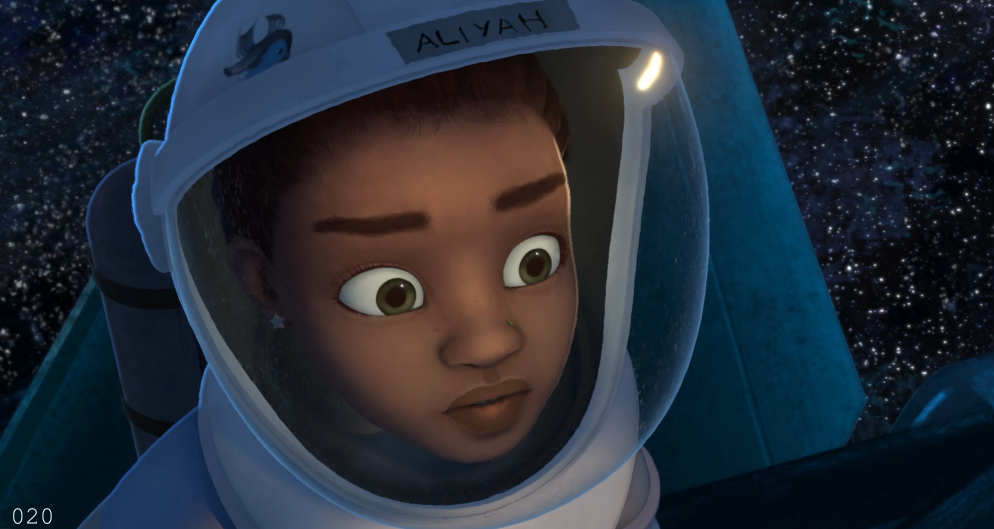
And for anyone who couldn’t make it, here’s our discussion of Little Bird facial rigging and animating a zero-g character with an ephemeral rig!

I forgot to mention it on stream, but the Aliyah face geometry we examine was based on a sculpt by Carol Cornils. Go check out the short for the rest of the credits!

Next stream we’ll take a break from rigging and take a look at the other Little Bird—the real time multipass rendering and compositing plugin for Unreal we developed to create the short.

Watch me pull an alien rabbit out of a hat

Yesterdays stream went very well! We rigged an entire character from scratch in about an hour and half. It’s as good an introduction to what Contour is all about as we’ve done so far. If you weren’t able to be there, come check it out here.

One of the things I’d like to do next is to take this weird alien rabbit and do a demonstration of the new ephemeral system with it, animating a scene live on stream. I don’t know if that’s the next one we’ll be doing or not, but it should be soon.

Pipe Stream

Honestly, I don’t know how I didn’t come up with that one right away. It should have been the very first stream pun I used on this blog. That it took me till the 4th Notional Pipe stream to see the obvious is a regret I’ll take to my grave.

Anyway, last weeks stream was good, but it got pretty esoteric! Take a look if you want to hear me rant about the evils of auto-rigging and Maya’s lack of a built-in method to mirror transform-space blendshapes.

So for this stream, we’re going to take a break from the pirate and go back to basics. I’ll be rigging a different character from scratch with Contour, and this time I’ll be taking it all the way to being a usable rig instead of diverting to subjects like tweak controls and PSDs, useful though those subjects are. This is basically going to be Contour 101 even more then the pirate is, so if you want a sense of what it’s like to rig a character from stem to stern with Contour without Python or diversions into more complex Maya rigging topics, this is the one to watch.

Come join us at 4PM EST at https://youtu.be/cLTwnZrAIGw